This 1966 Ford Mustang Gets A Modern V8 Heart For SEMA
Ford turns a 1966 Mustang Fastback into a usable restomod, with a 347-cubic-inch V8, electronic injection, and TREMEC TKX 600.
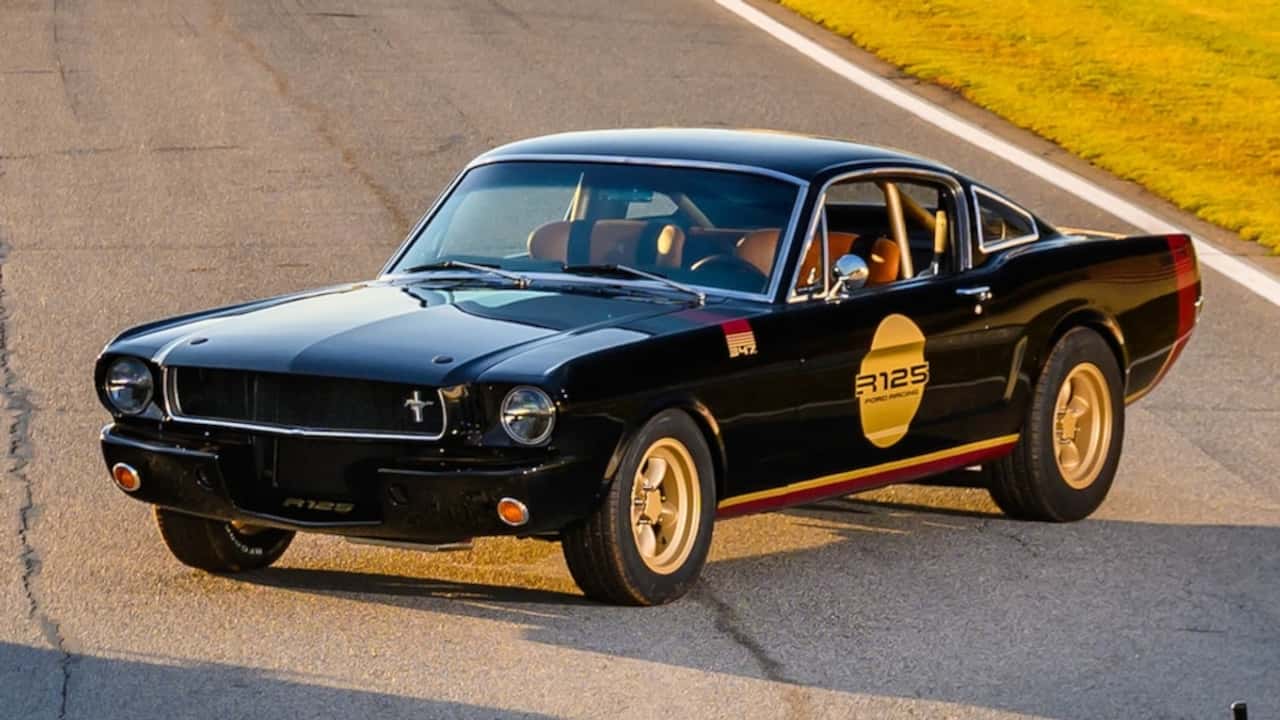

Ford just gave a 1966 Mustang Fastback a reason to leave the garage. The Ford Racing R125 debuted at SEMA 2026 as a tribute to Henry Ford's 1901 racing win, the victory that led to the founding of the Ford Motor Company 125 years ago.
Unlike a typical show build, the R125 is meant to be driven, not just photographed under lights. Ford built it to prove a classic Mustang can run modern, serviceable parts without the budget of a full-blown restomod project.
The R125 was built to be used and studied rather than preserved as a static museum piece. That distinction shapes every component choice on the car, from the engine block to the transmission tunnel.
A 1966 Fastback Built For Usable Performance

Ford Racing R125 Mustang Fastback Restomod
The R125 brief was never about chasing horsepower or building a one-off show trailer queen. Ford aimed for an approachable, lower-budget restomod that a daily driver could realistically replicate using parts sold through Ford Racing Parts.
Every major component on the car, the engine, the fuel injection, the transmission, is a catalog item. A builder using the same Ford Racing Parts list could assemble a similar car without hunting for rare or discontinued pieces.
It's a different pitch than the extreme builds SEMA usually rewards, something closer to the six-figure Revology Boss 429 restomod but aimed at a fraction of that cost.
The R125 keeps the fastback's 1966 silhouette intact, with only the mechanical internals swapped for parts you can order today.
Gallery: Ford Racing R125 Mustang Fastback Restomod






R125 Mustang Powertrain
Under the hood sits a 347-cubic-inch stroker version of Ford's classic small-block V8, built around an 8.2-inch-deck-height Boss 302-style block paired with aluminum cylinder heads. The crate engine is rated at 360 horsepower and 400 pound-feet of torque.
Fuel delivery comes from Edelbrock Pro-Flo electronic fuel injection, a modern system that swaps the carburetor headaches of a real 1966 engine for consistent cold starts and drivability. It's the kind of upgrade that makes a period-correct engine bay livable on a daily basis.
Power runs through a TREMEC TKX-600 five-speed manual, which Ford says shifts smoother and holds up better than the older TREMEC TKO it replaces. The gearbox's compact dimensions meant it dropped into the Mustang's floorpan with only minimal modification.
A transmission swap that avoids cutting and welding the floorpan keeps labor costs down. That lines up with Ford's goal: a restomod that doesn't require a professional shop's full attention to pull off.
More On The Mustang:
Source: Ford
RECOMMENDED FOR YOU
Ford Is Already Dropping The Dark Horse SC's $31,000 Track Pack
Ferrari F50 Sets New Auction Record With $18.7 Million Sale
Only 50 Of These 870-HP Mustangs Will Be Built Per Year
When (And When Not) To Use Your Hazard Lights
Ford Reclaimed The Nürburgring Record, But Corvette Won't Fight Back
The $800 Ford F-250 That Quietly Stole SEMA
Ford Secretly Built A Mustang Pickup Nobody Knew About