Honda Never Wanted The Ridgeline To Be A Traditional Pickup, Says Designer
Designer Don Herner recalls how an Advanced Capabilities Vehicle concept, focused on SUV interior space, evolved into Honda's unconventional Ridgeline pickup.
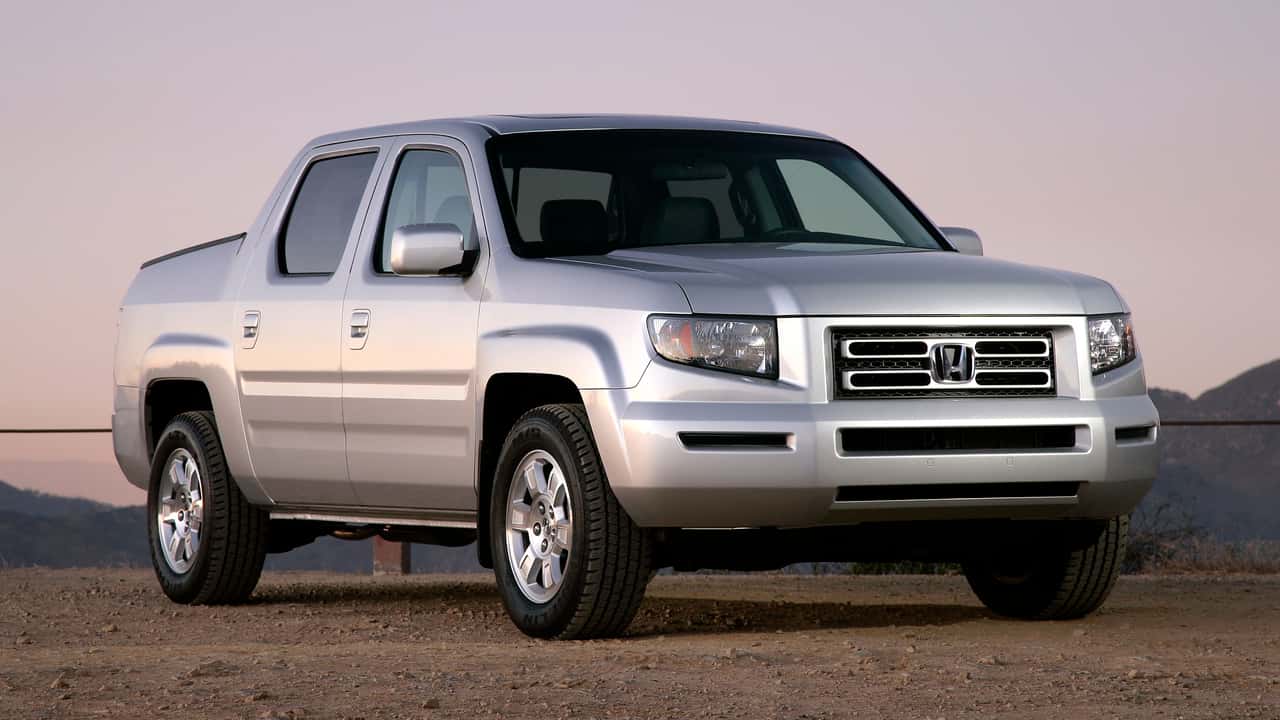

In the early 2000s, Don Herner was sketching truck concepts on his own time inside Honda's studio. The retired exterior design lead recalls the project that became the Honda Ridgeline starting as a side effort rather than a formal assignment, and its unusual construction traces back to that freedom
Herner says that same origin story helps explain why the Ridgeline has spent two decades fielding "fake truck" jokes from owners of body-on-frame rivals. The unibody pickup launched for the 2006 model year, and his account makes clear Honda set out to build something different on purpose. Herner said:
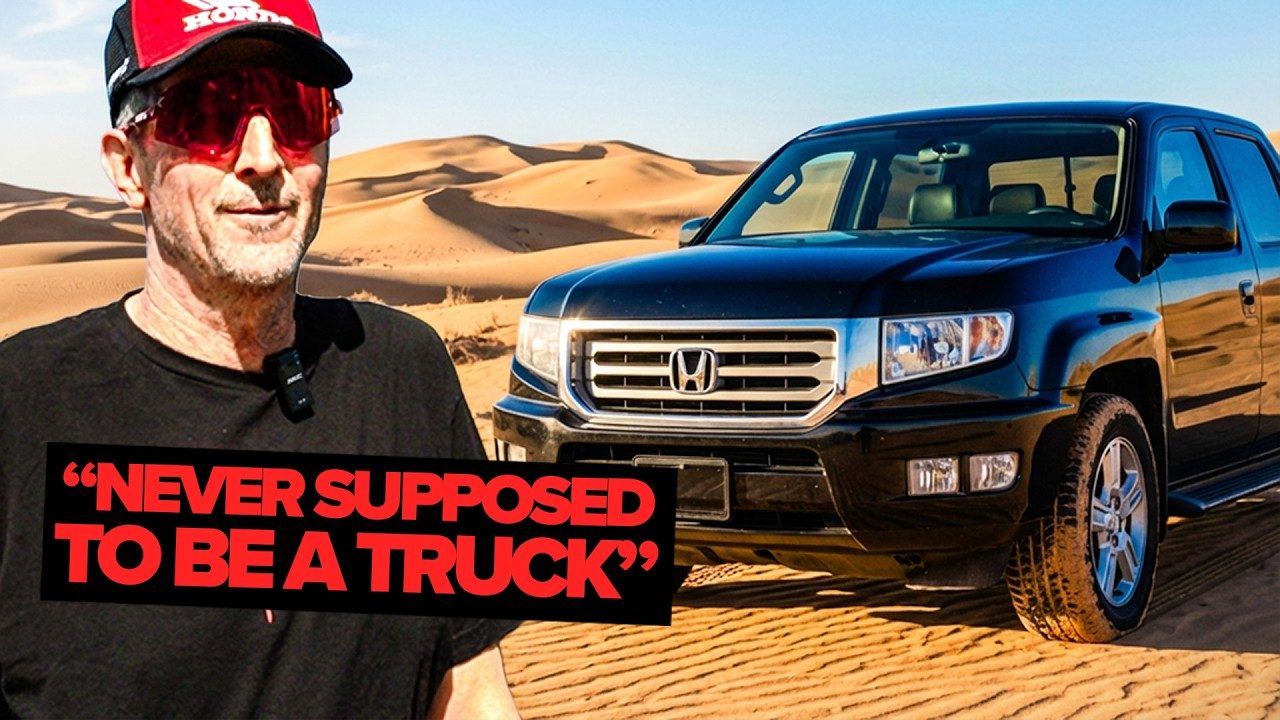
'I do not want to call it a truck because it was not really designed to be a truck, but everybody thinks it is,'
As first reported by Road & Track, he and his colleagues worked on the Ridgeline and the RDX during an unplanned sketch phase, with no executive brief pushing either project forward.

Designed For SUV-Like Space
Honda's internal name for the project shows where its priorities sat. The company called it the "Advanced Capabilities Vehicle," not a pickup. Herner described the goal plainly. "The target for this was, SUV interior size," he said.
'Our competitors at the time were the Tacoma and a Ford truck. This has a lot more interior space, a lot more legroom, and a lot more couple distance than the Tacoma did at the time.'
That priority shaped the project as it neared production. Honda executives reportedly examined the interior packaging before finalizing the exterior sheet metal, a sequence closer to how the brand builds a crossover than how it builds a truck. The Ridgeline rode on a heavily modified version of Honda's unibody platform shared with the Odyssey minivan.
It was also, at the time, the largest production vehicle Honda had ever built. That size forced changes on the assembly line itself just to get the truck through the plant. Honda reportedly explored co-branding the Ridgeline with Nike's All Condition Gear outdoor line, though that partnership never materialized.
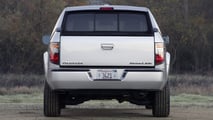
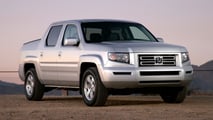
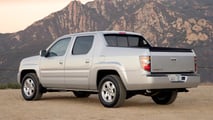
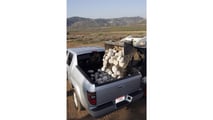
Gallery: 2008 Honda Ridgeline

Engineering Shaped the Wheels, Tires, And Bed
Herner's design team initially sketched the Ridgeline wearing 32 to 35-inch wheels and tires, truck-sized rubber meant to sell the rugged look. Honda's engineers overruled them. Herner said:
'This never really started out to be a truck project, per se, because Honda does not make a transmission robust enough to turn gigantic wheels and tires.'
Engineers wanted smaller wheels to preserve torque at the ground from the Ridgeline's 3.5-liter V6, which made 255 horsepower and 252 pound-feet paired with a five-speed automatic. Smaller rolling diameter meant the drivetrain did not have to work as hard to put that output to the pavement.
The cargo bed told a similar story of compromise. Its steel-reinforced composite construction carried a published maximum bed load of 1,100 pounds, a figure critics seized on for years as proof the truck was not serious. Herner pushed back on that reading of the numbers. "The bed was made to be super, super robust," he said. "They overloaded it through computer-aided engineering."
That first-generation bed still included features rivals did not offer, among them a dual-action tailgate, lockable underbed storage, and fold-up rear seats inside the cab. That package also delivered a total payload rating in the roughly 1,500-pound range, plus up to 5,000 pounds of towing, which covered what many midsize truck buyers actually haul.
Honda kept the unibody construction and several of those utility-focused features on the current Ridgeline while updating the exterior to fit traditional pickup styling cues. A third-generation Ridgeline is now officially in development, with Honda confirming it will reach the market within two years and that production of the current truck will pause later in 2026.
More From Honda:
Source: via Road & Track
RECOMMENDED FOR YOU
Honda Is Taking On Baja With A 1,300-HP Hybrid Passport
I Drove The Chinese Cars That Could Come To America. Here's What Impressed Me
The Honda Passport Is Going Baja Racing
Classic Datsun 240Z Gets Twin-Turbo Power And Carbon Fiber Body
The Honda Accord Is Getting A Radical Makeover. Here's Everything We Know
Toyota Floods SEMA With Five Lifted Woodland Concepts
Woman Changes Battery In Honda. Now Her Radio And Backup Camera Don’t Work: ‘That’s Illegal’