Audi CEO's Trump Rally Appearance Leaves Volkswagen Union Boss 'Ashamed' (Update)
VW's works council chief accuses Audi's boss and the Group’s leadership of becoming "puppets" in Trump’s political show.

UPDATE: An Audi spokesperson has replied to our inquiry:
'Neutrality with regard to party politics is an important principle for Audi, and one we remain firmly committed to. The decision to attend the event in Georgia was made after careful consideration and solely in the best interests of the company. The primary objective was to help create the conditions for a long-term investment by Audi in the United States. An investment of this nature is made with a view to the decades ahead and therefore extends far beyond any individual electoral cycle.
In these particular circumstances, we had to carefully balance the interests of the company with a specific window of opportunity to move the project forward. This in no way calls into question the principles set out in our Booklet of Policies. Our participation was solely intended to advance Audi’s specific business interests in relation to the planned investment. It was not an expression of support for any political party or political position.'
Separately, Audi has published a press release:
'Last weekend we announced that Audi is planning its first-ever production site in the USA. Local production in the USA is of great strategic and economic importance to Audi.”
The US is the world's second-largest premium market. At the same time, our business there is currently not profitable. Many of our competitors have had local production facilities for years. Having our own manufacturing plants will allow us to become more competitive, reduce trade and currency risks, and better leverage our growth potential. A stronger US business is therefore not a decision against Germany, but rather an important contribution to Audi's global competitiveness and to securing the company's long-term success.
The associated trip to Georgia and the public appearance with the President of the United States have raised questions and also raised concerns. As a company, we would like to address this.
An Audi delegation was in Georgia to further advance discussions and negotiations regarding our planned plant. As part of these discussions, we were asked to publicly present our plans together with the President of the United States of America.
We made the decision to accept this invitation solely in the interest of the company.
At the same time, we see that the announcement was perceived as a political signal. We take that very seriously.
We stand by the values and principles of our company. We also bear responsibility for Audi's economic future. For us, these two things are intrinsically linked and form the basis of our actions.'
Original article follows below.
Audi CEO Gernot Döllner is facing fierce criticism after joining Donald Trump on stage at a campaign event to announce a $4 billion investment in a new US factory. Daniela Cavallo, head of Volkswagen’s works council, says the executive’s appearance was embarrassing and accuses the group’s leadership of becoming props in the US president’s political show, according to comments reported by the German Press Agency dpa and published by Handelsblatt.
The controversy goes beyond the planned factory in Georgia, where Audi is expected to build large SUVs such as the Q7, Q8, and Q9. Cavallo argues that Döllner’s appearance at a Trump campaign rally crossed a line, particularly given the president’s rhetoric and VW's own history.
'Several minutes filled with racism, sexism, xenophobia, transphobia, and contempt for democracy—and then one of our top corporate representatives takes the stage and actively campaigns on behalf of a candidate. Anyone who heard Trump’s speech and had to witness Döllner becoming an active part of this event must have wanted to sink into the ground in shame.'
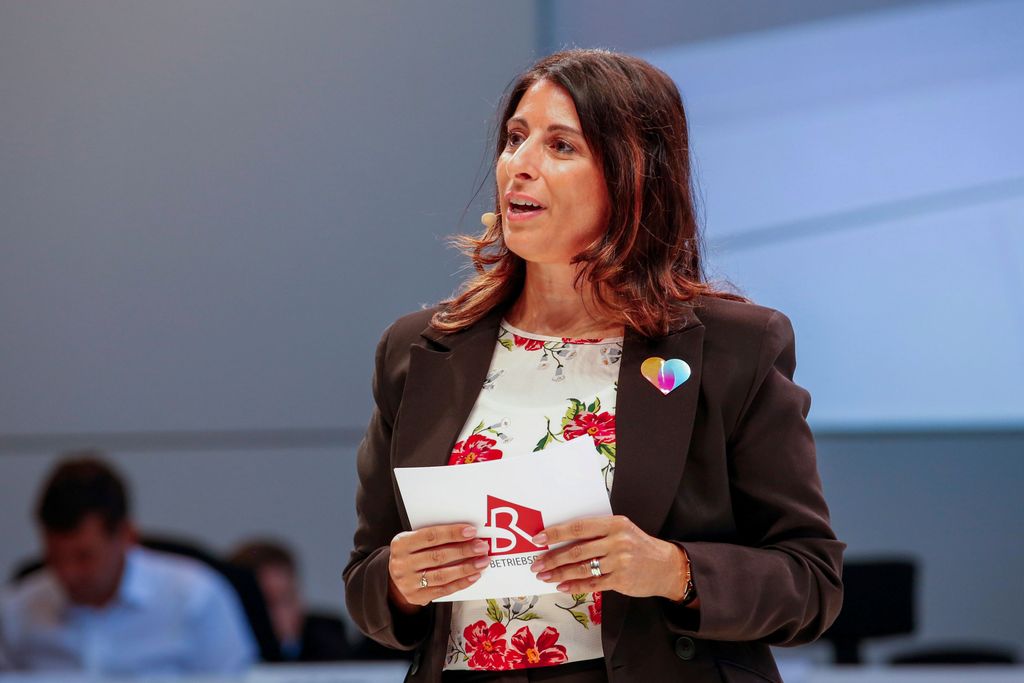
VW Group Leadership Accused Of Becoming Trump’s Puppets
That’s not all. Cavallo also targeted VW Group CEO Oliver Blume for letting himself be “turned into a puppet in the propaganda show of a highly dubious political figure who violates just about every one of our corporate values.”
Döllner’s appearance has also raised questions about Audi’s internal guidelines. According to Cavallo, the company’s rules prohibit high-profile public appearances with politicians running for office during the final three months before an election. She said Döllner signed the principles only a few months ago and believes his participation clearly violates them.
The timing is particularly sensitive. The US midterm elections are scheduled for November 3, and Trump used Saturday’s event in Perry, Georgia, to present Audi’s planned factory as a major win for American manufacturing. The president invited Döllner onto the stage after announcing the investment. Audi’s CEO thanked Trump for his support and described the United States as a market where the German automaker intends to commit long term.
Audi has already responded to the criticism, with Reuters quoting Döllner as saying:
'This decision was preceded by many months of careful planning and intense negotiations. If the American president invites you, you accept the invitation. That is what respect for the office and for the country in which we invest demands.'

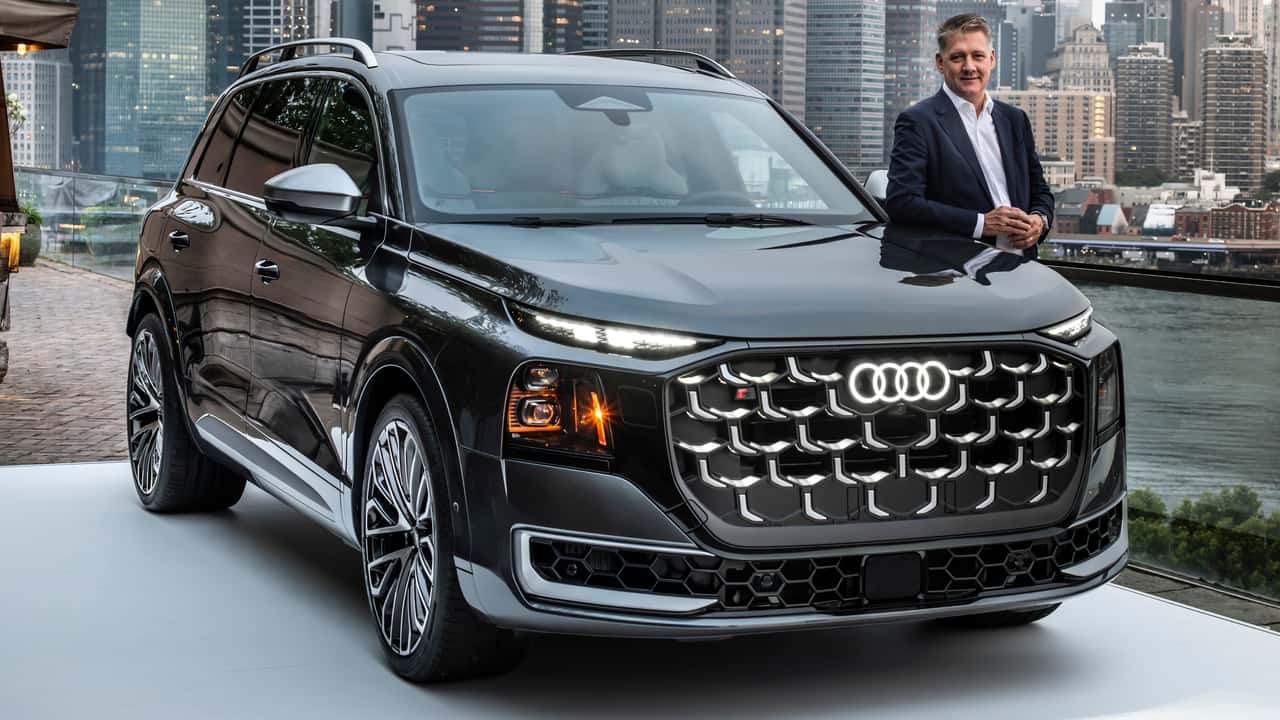
Audi CEO Gernot Döllner and the new Q7
But that brief appearance has since overshadowed the business announcement, with critics arguing that Audi effectively handed Trump a campaign talking point just days before voters head to the polls.
As we reported over the weekend, Audi plans to invest around $4 billion in its first US factory, which is expected to produce up to 200,000 SUVs annually and create approximately 4,500 jobs. Construction is scheduled to begin in 2027, with production expected to start in the early 2030s.
Made In USA
The proposed facility would help Audi reduce its dependence on imports at a time when US tariffs are putting significant pressure on VW Group’s finances. Audi currently builds vehicles in Europe and Mexico for American customers, leaving it exposed to import duties.
The factory also raises questions about what it could mean for VW’s existing production network, particularly in Germany, where the group is already under pressure to cut costs and address excess capacity. Cavallo made it clear that worker representatives would not automatically approve the project. They want a comprehensive assessment of how the investment would affect the group’s other plants before giving the green light.
Separately, IG Metall union chief Christiane Benner also criticized Döllner’s appearance alongside Trump, calling it embarrassing and politically unacceptable. She also echoed Cavallo, saying Audi has breached its internal guidelines on political neutrality.
'The way Gernot Döllner presented himself and Audi in the U.S. is highly embarrassing, politically unacceptable, and unworthy of the company—but above all, of Audi’s employees. Döllner is also in flagrant breach of his own company's rules, which expressly require political neutrality in the run-up to elections.'
Audi now faces the challenge of convincing workers and the public that its American expansion is a sensible industrial strategy rather than a political favor. The factory may ultimately help the company compete in the US. Still, the controversy surrounding its announcement highlights the delicate balance automakers must strike when pursuing business opportunities under a politically divisive administration.
We have reached out to Audi for comment and will update this article if we receive a response.
More From Audi:
Sources: dpa via Handelsblatt, Reuters
RECOMMENDED FOR YOU
Audi Reportedly Exploring A New Off-Road SUV Based On Scout
2027 Jeep Compass Gets A Price Hike As Standard Features Improve
The Audi A8 Gets A Concept C Makeover, And It Looks Fantastic
Mercedes Boss Talks Electric E-Class, Developed From A 'White Sheet Of Paper'
Porsche Just Confirmed Audi's Electric Sports Car Will Share Its Boxster And Cayman EV Platform
Karma Teases A Winged, Track-Ready Coupe For Halloween Reveal In Las Vegas
Porsche Says No To US Factories While Audi Pours $4 Billion Into Georgia