Toyota Pairs New Platform With Next-Gen Hybrid Built Around All-New Gas Engine
The smaller, lighter hybrid system targets more than 15 percent better fuel economy.
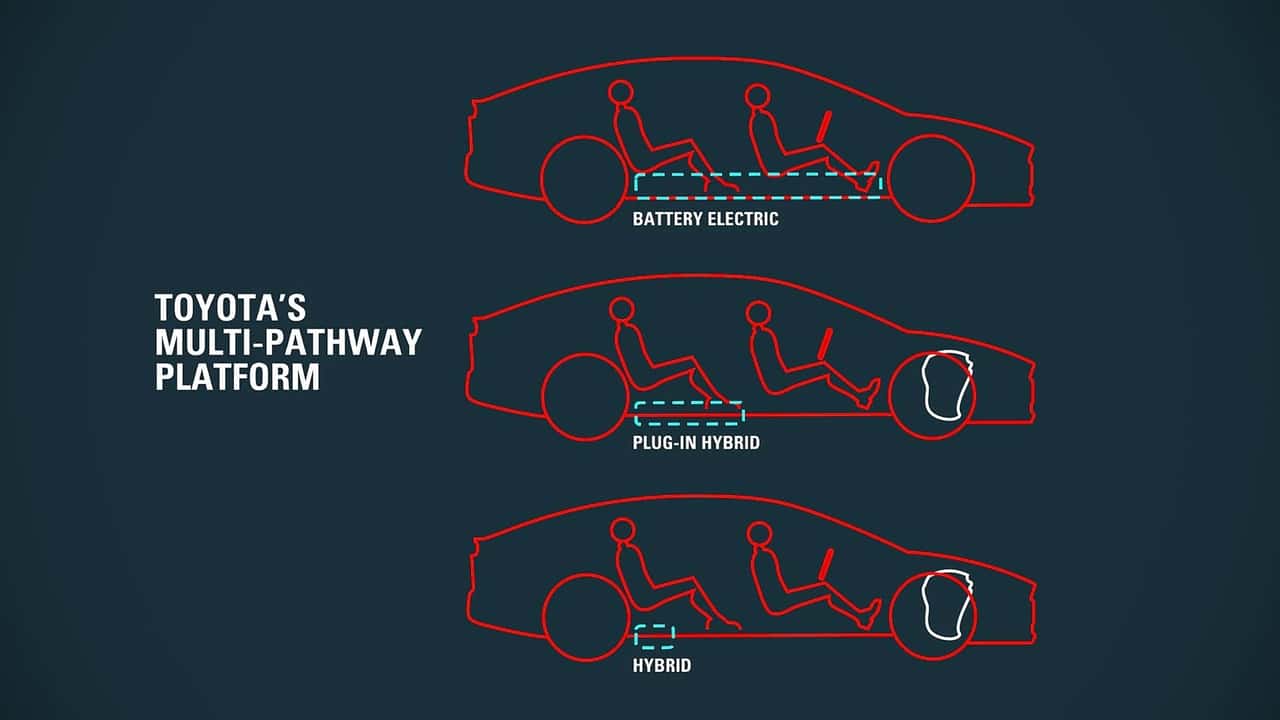

Toyota has repeatedly defended its decision to maintain a varied powertrain lineup, arguing that the transition to electric vehicles won't happen at the same pace everywhere. In fact, the automaker has acknowledged that many parts of the world still have people who "cannot get by without gasoline-powered cars." Limited charging infrastructure, longer recharge times, and higher EV purchase prices remain obstacles for many buyers.
That's why Toyota continues to invest in combustion engines and hybrids rather than betting everything on fully electric vehicles. This week, the European side of the automotive juggernaut shared details about a new platform developed to accommodate conventional hybrids, plug-in hybrids, and fully electric vehicles. The new architecture centers on an all-new hybrid system and a four-cylinder engine.
Toyota's revamped hybrid system uses smaller electric motors, power control units, and inverters that take up less space and weigh less. The more compact hardware gives engineers greater flexibility during development, but customers care more about the promised fuel-economy improvement of more than 15 percent.

Toyota's new 1.5-liter, four-cylinder gasoline engine
A New Gas Engine Will Power Toyota's Next-Gen Hybrids
To achieve that, Toyota is also developing an entirely new 1.5-liter four-cylinder gasoline engine. Depending on the application, it'll be available in both naturally aspirated and turbocharged forms, replacing the existing 1.5- and 1.8-liter engines.
The redesigned engine sits lower in the vehicle, allowing for a lower hood and "more dynamic vehicle proportions." As a result, future models are expected to adopt sleeker designs and a lower stance. Interestingly, Toyota says that despite accommodating batteries, hybrids and plug-in hybrids won't compromise interior space.
The promised efficiency gains will also come from improved thermal management, reduced mechanical friction, and lower electrical losses. Toyota will further improve fuel economy through better aerodynamics, with future models featuring sleeker bodywork and lower drag coefficients to help achieve the targeted fuel economy gains.
But Toyota is taking a different approach from automakers that develop dedicated platforms exclusively for electric vehicles. By using a common architecture for EVs, PHEVs, and conventional hybrids, the company can spread development and manufacturing costs across a larger volume of vehicles, achieving economies of scale while giving factories more flexibility to adjust production to customer demand. Of course, this isn't without precedent, as the existing TNGA architecture was developed with the same mindset.
New Toyota four-cylinder engines


Toyota's New Platform For Everything
However, fitting different powertrains into the same basic structure inevitably introduces packaging constraints. EVs benefit from a platform designed specifically around a battery pack and electric motors, while combustion-engine vehicles need room for an engine, transmission, and associated hardware. Toyota says its smaller hybrid system will minimize these compromises, but whether it can match the packaging efficiency of a dedicated EV platform remains to be seen.
Developing an entirely new gasoline engine and a more efficient hybrid system makes it clear Toyota isn't going all in on EVs anytime soon. While rivals continue to pour money into all-electric lineups, the world's largest automaker is doubling down on keeping its options open, sticking with combustion engines for the long haul.
This strategy may lack the simplicity of an all-electric future, but Toyota is betting flexibility will pay off. In fact, it's still investing in hydrogen fuel-cell technology, even as many other automakers scale back or abandon efforts in this area.
Engines Still Have A Future, According To Toyota
Toyota's new engine and hybrid powertrain could eventually reach vehicles beyond its own lineup. The automaker plans to sell the hardware to other manufacturers, targeting €1.5 billion ($1.7 billion) in annual revenue from external powertrain sales by 2032, with deliveries potentially beginning as early as next year.
The 1.5-liter isn't the only engine in Toyota's next-generation family. A larger turbocharged 2.0-liter four-cylinder, the G20E, is targeted at around 400 horsepower. Unlike the smaller engine, designed primarily for efficiency and electrification, the larger unit is intended for performance applications.
Toyota has already tested it in a mid-engined GR Yaris prototype and a GR86-based race car, while a new mid-engined sports car believed to be the MR2 successor is also expected to use it. We also wouldn't rule out a detuned version for normal cars without Gazoo Racing branding.
Toyota's New Engines Are Coming:
RECOMMENDED FOR YOU
Toyota Recalls 228,000 Sienna Vans Over Seat Backs That May Unlock In A Crash
2027 Jeep Compass Gets A Price Hike As Standard Features Improve
The Toyota Crown Signia Finally Embraces The Wagon Look For SEMA
Mercedes Boss Talks Electric E-Class, Developed From A 'White Sheet Of Paper'
Toyota Wants To Cash In Billions By Selling Its New Gas Engines To Other Companies
Karma Teases A Winged, Track-Ready Coupe For Halloween Reveal In Las Vegas
Toyota Put Snow Tracks On Five Of Its Trucks and SUVs. Because Why Not?