Famous Designer’s Ruf 1970 Porsche 914/6 Sells For Six Figures
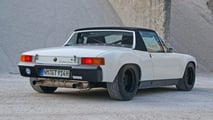
Ruf turns Luc Donckerwolke’s Porsche 914/6 from a Lemon Yellow GT-style build into a Grand Prix White, track-focused machine.
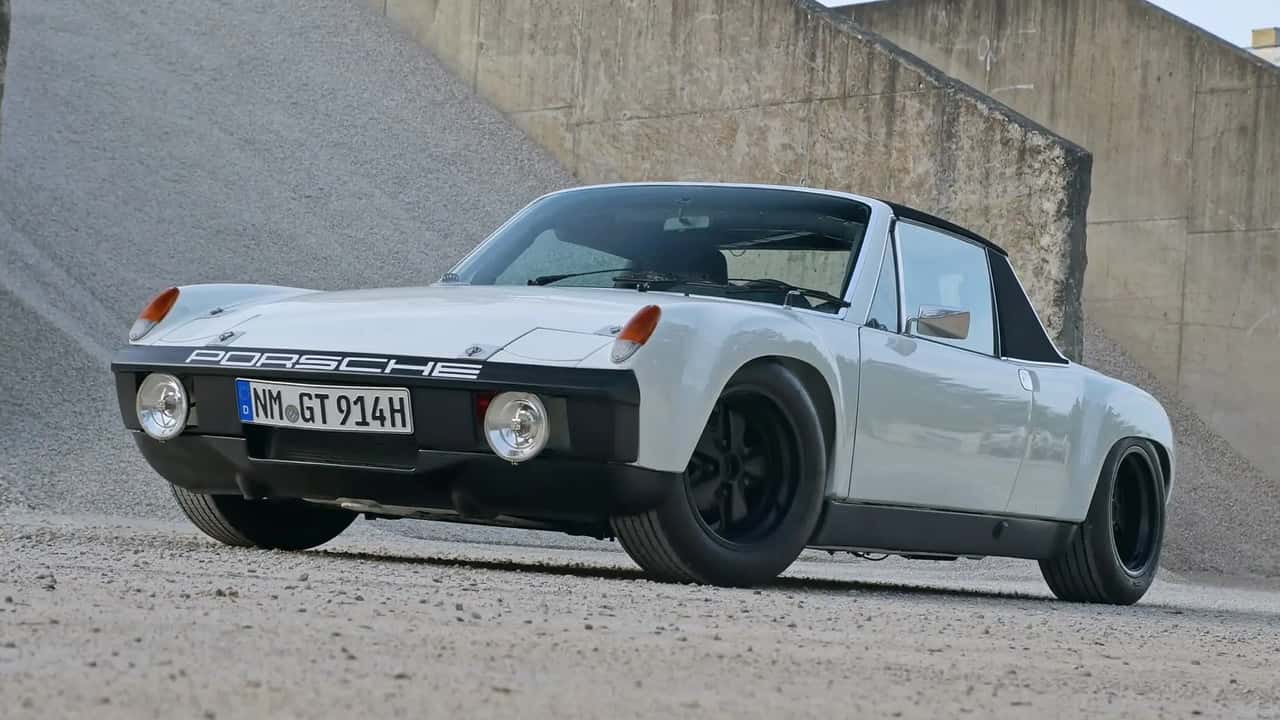

A 1970 Porsche 914/6 built for a designer who later ran Hyundai's entire visual language just sold for €225,000 (about $253,000) on Bring a Trailer. The car belonged to Luc Donckerwolke, and what Ruf did to it explains the price.
Donckerwolke bought the 914/6 in 2020, long before Grand Prix White replaced its factory Lemon Yellow. The rebuild that followed turned a quirky Porsche and Volkswagen co-production into something closer to a road-going race car.
Race-Ready Machine

RUF 1970 Porsche 914-6 Owned By Luc Donckerwolke
Ruf Automobile, working out of its Pfaffenhausen shop in Germany, did not start from a stock car. The 914/6 had already been converted to Porsche's M471 GT specification back in 1975 by a Belgian dealer. That work added steel fender flares, chassis reinforcements, and wider 15-inch Fuchs wheels.
Ruf kept those flares and built around them. The shop added a fiberglass hood, engine cover, bumpers, and rocker panels to cut weight without undoing the GT-spec bodywork already in place.
A central fuel filler and the Grand Prix White repaint followed, replacing the Lemon Yellow the car wore from the factory.
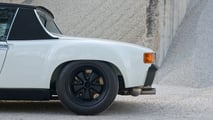
The black Fuchs wheels still measure 8 inches wide up front and 9 inches at the rear, now wrapped in Michelin TB15 tires. Ruf swapped in RSR calipers, a brake bias bar, and new control arms. That's the kind of chassis work that separates a cosmetic tribute from a genuine driver's car.
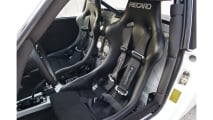
Recaro seats in black vinyl replaced the stock buckets inside, strapped in with Willans harnesses under a padded Heigo roll bar. It is a cabin built for a track day.
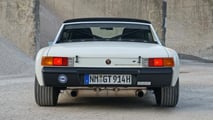
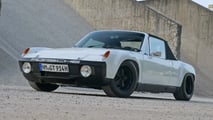
Gallery: RUF 1970 Porsche 914-6
The 2.4-Liter Flat-Six
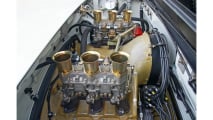
The original flat-six displaced 2.0 liters. Ruf bored it out to 2.4 liters using 87.5-millimeter (3.4-inch) Mahle pistons and cylinders, a common upgrade for air-cooled Porsche sixes chasing more usable power without a full redesign.
Dual-plug ignition joined the enlarged engine, paired with a Monte Carlo-style oil cooling setup and a stainless Friedrich Motorsport exhaust. Gold-chromed velocity stacks sit atop the triple-throat Weber carburetors, a detail as functional as it is visually distinctive.
Power reaches the rear wheels through a five-speed manual gearbox with a limited-slip differential, backed by a new clutch and a lightweight flywheel Ruf installed during the build. The tuner has a long record of pairing this kind of hardware focus with understated styling changes on its Porsche projects.
The five-digit odometer was zeroed during the restoration and now reads 321 kilometers (199 miles). A Porsche certificate confirms the factory colors and serial numbers, and the car ships with its original manual, service books, and German registration.
More From Porsche:
Source: Bring A Trailer
RECOMMENDED FOR YOU
Porsche Just Confirmed Audi's Electric Sports Car Will Share Its Boxster And Cayman EV Platform
Mazda Is Quietly Killing One Of Its Most Unusual Engines
Porsche's New Supercar Is Enjoying ‘Overwhelming Feedback,’ But It's Not Coming Anytime Soon
Do Hybrid Engines Actually Wear Out Faster? The Answer Isn't Simple
Porsche Says No To US Factories While Audi Pours $4 Billion Into Georgia
2027 Jeep Compass Gets A Price Hike As Standard Features Improve
How Porsche's US Headquarters Became Home To Marvel's Avengers