Feds Wants Robotaxis To Use Cyan Lights To Signal Self-Driving Mode
Optional cyan ADS marker lamps would signal when automated systems like Mercedes-Benz Drive Pilot take over, under rules still in draft form.


NHTSA has drafted a rule that would let self-driving cars use steady cyan lights to show when the automated system is in control. The plan would update Federal Motor Vehicle Safety Standard 108, the federal lighting rule, to cover vehicles like Tesla's Cybercab that arrive without a steering wheel or pedals.
The draft would let automakers add optional cyan "ADS marker lamps" that switch on only when nobody is expected to watch the road. Comments on the plan are due 30 days after the notice appears in the Federal Register, before regulators decide whether to finalize anything.
Cyan Lights Optional, Not Required

Tesla Cybercab
Nothing in the filing forces an automaker to install these lamps. The proposal would standardize cyan as the color and set mounting and visibility rules for any company that chooses to use them. A driverless car without the lights would still be legal under the same draft.
That optional structure leaves room for different approaches across the industry. A robotaxi fleet could adopt the lights for public recognition while another manufacturer skips them entirely, and both would comply with the same federal headlight rules NHTSA is rewriting.
The idea traces back to Mercedes-Benz, which tested turquoise lights on vehicles running its Drive Pilot system in California and Nevada between 2023 and 2025. NHTSA Administrator Jonathan Morrisson said the new rules would cut "unnecessary regulatory burdens" for vehicles built without manual controls while setting clear standards for marker lamps.
China is studying similar identification ideas for higher level driving systems.
Gallery: Mercedes-Benz Approved For Blue Lighting On Drive Pilot


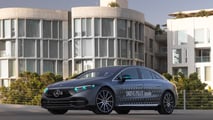
How The Cyan Lights Works
The lamps would turn on only when the automated system is driving with nobody expected to monitor the road, then switch off the moment human monitoring is expected again. NHTSA's filing is specific on this point: the lights illuminate steadily rather than flash, and every lamp on the vehicle switches on and off together.
Placement is tightly defined too. Automakers could mount one or two lamps at the front, one or two on each side, and one or two at the rear, for a total of four to eight lamps per vehicle, with each one at least 15 inches off the ground and kept visually separate from other lights.
A single front or rear lamp has to sit on the vehicle's centerline, while a pair needs matching height and even spacing. The draft stops automakers from going further than that. A car can't string extra cyan lights along its body beyond the specified arrangement.
The same filing would also drop the 12.8-volt test requirement for integrated headlamps, letting manufacturers certify lighting at voltages suited to LED systems. It follows NHTSA's earlier decision to drop the manual brake pedal requirement for vehicles that an automated system controls on its own, while the agency's Cybercab certification investigation stays open.
More On Autonomous Driving:
Source: NHTSA
RECOMMENDED FOR YOU
Toyota Wants To Convince The EU That Some Hybrids Are Zero Emissions
2027 Jeep Compass Gets A Price Hike As Standard Features Improve
The NHTSA Wants To Fix America's Outdated Headlight Rules
Mercedes Boss Talks Electric E-Class, Developed From A 'White Sheet Of Paper'
Trump Signs Tax-Free Red Diesel Order For Highway Use
Karma Teases A Winged, Track-Ready Coupe For Halloween Reveal In Las Vegas
California Is Finally Cracking Down On Montana's Supercar Tax Loophole