Man Goes To Car Dealership. Then He Falls Victim To The Little-Known ‘Technician Trap‘
“As a tech, you're sold the pipe dream."
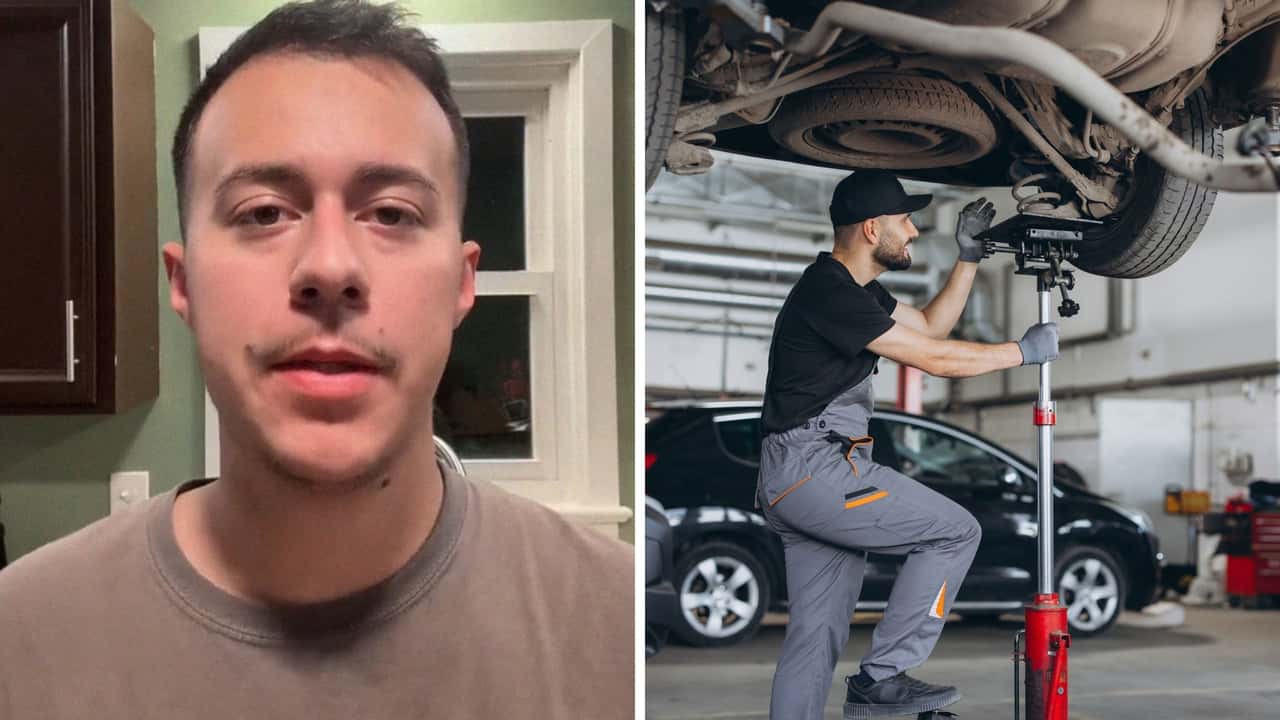

Here’s the fairytale version of life as a mechanic: the better you get at fixing cars, the more money you make.
That’s how things are supposed to work in a perfect world, but a former dealership technician says auto repair at a dealership can completely flip that equation on its head.
A viral TikTok from Carlos Lozada (@dailywrench), co-owner of On The Go Services, an auto repair shop in Harrisburg, Pennsylvania, details his years toiling away in dealership garages, where the economics of flat-rate pay structures quickly became a turnoff. Lozada said his motivation to start his own business stemmed from a need to escape the bean-counting ways and misaligned priorities of dealers most driven by sales numbers.
“As a tech, you're sold the pipe dream that you get paid by the job, not by the hour. It sounds great on paper,” he said in the clip that’s been viewed more than 77,000 times. “It's a trap. It's a never-ending revolving door, and the one that always gets screwed is you.”
The Math Stops Mathing
Lozada admits that the math can work beautifully when a technician gets the right jobs, pointing to a brake job that might pay an hour and a half of labor even if an experienced mechanic can finish it in 20 or 30 minutes. Work quickly and stack enough jobs together, and a flat-rate technician can turn a normal shift into far more than eight paid hours.
The problem, Lozada said, is that the workload changes as the technician becomes more capable.
Entry-level technicians usually start with oil changes, tire rotations, software updates, and other routine work, moving into brakes, maintenance, and more complex repairs as they gain experience. Eventually, the most capable technicians become the ones trusted with the cars nobody else in the shop can figure out.
“A lot of cars have extended and extensive warranty problems because nobody can fix them,” Lozada said. “Are you going to give a complicated warranty diagnosis on a brand new car to an entry-level tech that can only handle brakes? No. Who gets stuck with it? You.”
Soon, the most experienced technician ends up buried in difficult diagnostic work and capped-cost warranty repairs, while less experienced workers continue cycling through quicker, more predictable jobs. Lozada argues that the flat-rate system makes that imbalance especially painful.
Technicians are generally paid based on the labor time assigned to a repair, rather than on the hours they actually spend on the car. Beat the allotted time and the technician comes out ahead, but if they spend too long chasing down a difficult problem, the math can swing the other way.
There was plenty of agreement from technicians weighing in on Lozada’s toolbox tales. One Honda master technician said he now spends so much time diagnosing problems without additional pay that he “should've stayed being a lube tech.”
Another mechanic with 18 years in the trade said increasingly complicated cars and declining pay have left him wondering whether he can stomach another 15 years in the business. Others advised technicians to take their skills somewhere else.
“City fleet mechanic here will never step foot in a dealer again,” one commenter wrote. Others recommended government fleet work, heavy equipment repair and industrial maintenance, while an apprentice at a dealership asked how to make the jump into fleet work.
Those alternatives can come with noticeably different paychecks. The Bureau of Labor Statistics puts median pay for automotive service technicians at approximately $51,000 as of May 2025, though technicians working at automobile dealerships had a higher median of nearly $60,000.
Heavy vehicle and mobile equipment technicians, one of the alternatives repeatedly mentioned in the comments, had median pay of $63,850.
More Mechanics Needed
As a whole, the automotive industry is struggling to replace the technicians feeling much like Lozada. BLS projects about 66,200 automotive technician openings each year through 2035.
The National Automobile Dealers Association estimates the broader auto and truck retail industries need nearly 76,000 replacement technicians annually, but US technical programs graduate only about 39,000 new service technicians each year, leaving an estimated annual shortfall of roughly 37,000 trained workers.
Lozada eventually chose to bet on himself and his best friend, opening an independent repair shop and trading dealership frustrations for the headaches of bwning a business.
“Probably the most complicated thing I've ever done, the most expensive thing I've ever done, the most stressful thing I've ever done,” he said, though it sounds like he still considers it an improvement.
“When you leave the dealership and all you know is dealership and all you know is flat rate and getting the next job and getting the next paycheck and getting the next everything, you realize how miserable that gets.”
Motor1 reached out to Lozada via phone and email. We'll update this story if he responds.
RECOMMENDED FOR YOU

GMC Driver Gets A Sensor Error On Her Yukon. Why Has It Taken Months To Fix?
2027 Jeep Compass Gets A Price Hike As Standard Features Improve
Man Borrows Girlfriend’s Car. It Only Has 1 Mile In The Tank. She Says That Means It Has 15 Miles Left
Mercedes Boss Talks Electric E-Class, Developed From A 'White Sheet Of Paper'
Expert Warns ‘Elder Millennials’ From Buying Kia Telluride. Is He Right?
Karma Teases A Winged, Track-Ready Coupe For Halloween Reveal In Las Vegas
Woman's Certified Pre-Owned Genesis GV70 Starts Pulling. Suddenly, There’s Fluid On The Floor