Mary Barra Says EVs Are Still GM's Endgame
GM leans on profitable trucks and SUVs while Mary Barra keeps its electric vehicle strategy aimed at batteries, software, and charging upgrades.


- Mary Barra said electric vehicles remain GM's "end game."
- She pegged EVs at roughly 40 to 50 percent of sales by 2030.
- GM is investing in batteries, software, and charging infrastructure to support electrification.
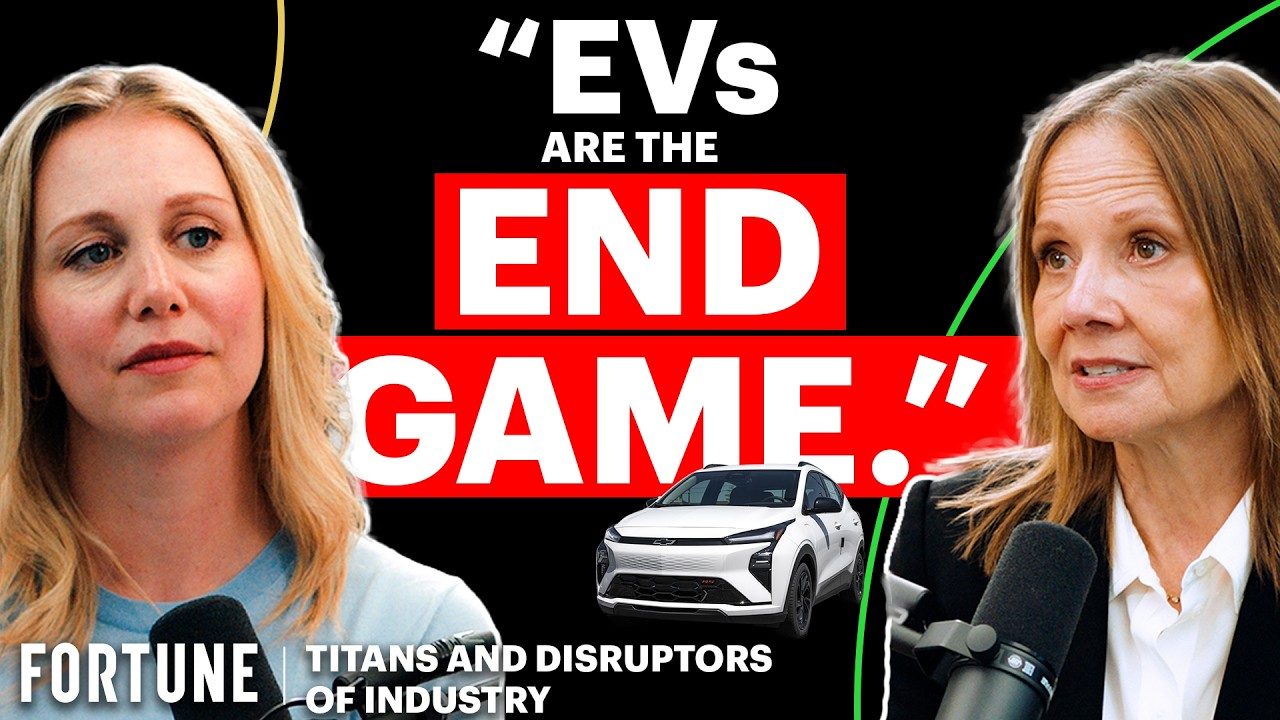
Mary Barra is not backing off. In a September interview with Fortune, GM's CEO said electric vehicles remain the company's "end game," even as US adoption slows and political support wobbles.
Barra pegged EVs at roughly 40 to 50 percent of sales by 2030, a target that still assumes gas and hybrid models cover the rest of the showroom for years to come.
GM's EV Strategy After Mary Barra's Remarks
Barra's message was not a change in course, but the repeating of a stance she has held through years of shifting demand, and it hits differently now that GM's EV sales are slipping in the US.

She blamed the pace on regulation. China and Europe adopted EVs faster because their governments pushed harder on emissions rules and charging infrastructure while US policy has moved in uneven steps.
Charging remains the practical bottleneck. Federal infrastructure money has expanded the network, Barra noted, but delays in securing permits slow how fast new stations actually go live, even as the total count grows every quarter.
None of that changes GM's product planning. The company still plans hybrids alongside its EV lineup rather than a single-lane bet, a mix that also explains why GM canceled its electric truck program without dropping electrification altogether.

What Mary Barra Said About GM's Electric Future
"EVs represent the end game," Barra told Fortune, adding that the shift will likely take decades rather than arrive on a fixed near-term deadline. She called electric vehicles GM's "north star" even amid short-term turbulence.
That patience shows up in how GM is spending. Batteries, software and charging infrastructure still get investment, and the automaker's 20-year SAIC partnership renewal signals it is not retreating from global electrification plans either.
Barra's pragmatism runs beyond propulsion choices. GM is leaning on profitable trucks and SUVs to fund the transition, a strategy that echoes how Cadillac's F1 technology could reach future performance cars, another long-term bet paid for by today's earnings.
Wall Street took the comments as reassurance. GM shares gained after Barra's remarks, with investors treating "still the end game" as confirmation the company's electric strategy has not wavered, even as it adjusts timing and targets around it.
Motor1's Take: Barra's firm line keeps GM's long-range plan intact while letting the company adjust timing. The speed of charging rollouts and obtaining permits will largely decide how quickly customers switch. Investors got a relief rally, but plan execution risk is real.
More From GM:
Source: Fortune Magazine via GM Authority
RECOMMENDED FOR YOU
VW Group Says The Quiet Part Out Loud: EVs Are Still Less Profitable Than Gas Cars
Mazda Is Quietly Killing One Of Its Most Unusual Engines
Toyota Pairs New Platform With Next-Gen Hybrid Built Around All-New Gas Engine
Are Hybrids Actually Less Reliable? The Answer Isn't So Simple
This New Mercedes Gas Engine Has An Electric Turbo, And It's Not For AMGs
2027 Jeep Compass Gets A Price Hike As Standard Features Improve
GM Is Finally Bringing Hybrid Power To Three Of Its Largest SUVs