New Dacia Spring Revealed: Europe's Dirt-Cheap EV Gets A Glow-Up
Better than its predecessor in every way, the electric city car offers a lot of bang for the buck.
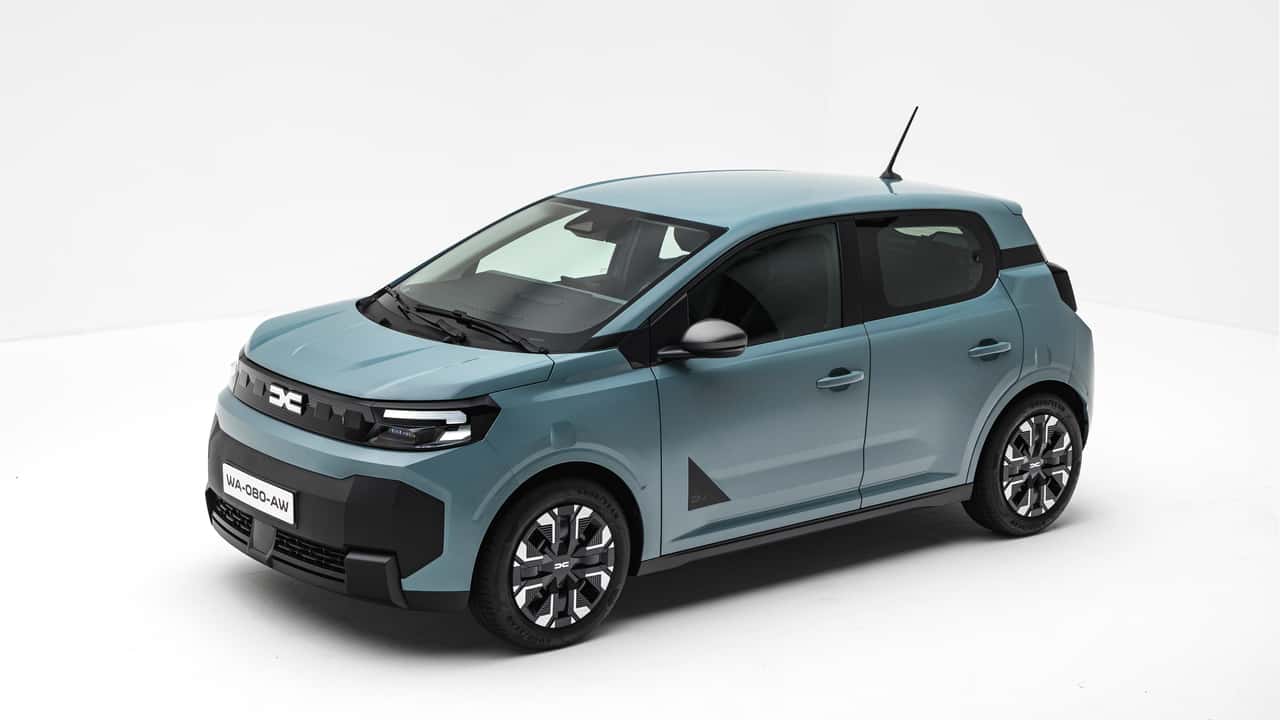

Fall just started in Europe, but at Dacia, it’s Spring time. The second-generation model is completely new from the ground up, but it remains faithful to Dacia’s no-frills philosophy. Better yet, the little boxy hatchback aims to democratize EVs while the European Union continues to pressure automakers to drop combustion-engine cars. By 2035, CO2 fleet emissions must go down by 90 percent compared to 2021 levels. It's all but an ICE ban.
The new Spring is the first of four fully electric models Dacia plans to launch by the decade's end. It also marks an important shift for the nameplate, which has racked up more than 210,000 sales across over 40 countries since 2021. This time around, Dacia has moved production from China to Europe, with the new Spring being built at Renault Group’s plant in Novo Mesto, Slovenia.
Visually, the transformation is hard to miss. Dacia has given the Spring a more upright and muscular appearance, with a heavily sculpted front end, pronounced wheel arches, and black trim connecting the headlights and taillights. The new model is also substantially wider, gaining a whopping 18 centimeters (7.1 inches) over its predecessor, while overall length increases by a considerable 15 cm (5.9 inches).
2027 Dacia Spring Key Facts
- What’s new? The second-generation Dacia Spring is completely redesigned, with a larger, more muscular body.
- What’s with the design? The new Spring is 5.9 inches longer and 7.1 inches wider, giving Dacia’s tiny EV a much more substantial look.
- What about the powertrain? The Spring uses a single electric motor producing 80 horsepower and 129 pound-feet of torque.
- What about range and charging? A 27.5-kWh LFP battery provides up to 155 miles of WLTP range, while optional 50-kW DC fast charging takes the battery from 15 to 80 percent in 28 minutes.
- How much does it cost? The new Spring starts at €17,900 in Italy and will cost less than €20,000 across Europe before any government incentives.

2027 Dacia Spring rear design
The Renault Twingo’s Chubby Brother
Despite the growth spurt, at 3.85 meters (151.6 inches) long and 1.74 meters (68.5 inches) wide, it remains firmly in city-car territory but should feel considerably more substantial on the road. Essentially, the 2027 Spring is Dacia’s take on the reborn Twingo, though we would argue it’s not nearly as charming as the retro-flavored EV sold by parent company Renault. It does get the pop-out rear windows, an absolute rarity in 2026.
Power comes from a single electric motor producing 80 horsepower and 175 Nm (129 lb-ft) of torque. Dacia quotes a sprint to 62 mph (100 km/h) of 12.1 seconds and a top speed of 130 km/h (81 mph). Those numbers are hardly impressive, but they’re perfectly adequate for the urban jungle where the Spring will spend the vast majority of its time.
The battery is a 27.5-kWh lithium iron phosphate (LFP) pack that delivers up to 250 km (155 miles) of WLTP range. That’s only a tad better than the old car, but Dacia says most owners of the previous-generation Spring drove an average of just 34 km (21 miles) per day, with 75 percent charging at home. In other words, the relatively small battery isn't necessarily a compromise for the target customer.
Charging is similarly geared toward everyday use. The standard 6.6-kW AC charger can take the battery from 15 to 80 percent in nine hours using a domestic outlet so that you can charge it overnight at home. A beefier 11-kW AC setup cuts that to 1 hour and 55 minutes, while the optional 50-kW DC fast-charging capability can take the battery from 15 to 80 percent in just 28 minutes.
2027 Dacia Spring interior (with buttons and knobs!)
The Perfect Balance Between Buttons And Screens
The makeover continues inside. A 7-inch digital instrument cluster comes standard and is paired with a 10.1-inch central touchscreen. Even though the cost-cutting era is in full swing, the new Spring has plenty of buttons and knobs, along with a long-running Renault trait: separate volume controls behind the steering wheel. It's also where you'll find the shifter.
Dacia has also focused heavily on storage and practicality, with the new Spring offering up to 337 liters (11.9 cubic feet) of trunk space, a decent figure for such a tiny car. Fold the 50:50 split rear bench and capacity rises to 1,283 liters (45.3 cubic feet). An optional 18-liter (0.6-cubic-foot) compartment under the hood provides additional room for the charging cable and other small items.
Despite being a low-cost EV, the new Spring isn't completely spartan. Depending on trim, equipment includes keyless entry, a rear parking camera, wireless Apple CarPlay and Android Auto, connected navigation, smartphone connectivity, and the nifty YouClip accessory system. The quirky hatch can also be equipped with vehicle-to-load (V2L) functionality, allowing its battery to power small electrical devices. Mandatory in all new cars sold in the EU, the camera mounted in the A-pillar is part of the driver-monitoring system.
And then there's the price. Dacia says it’ll start at less than €20,000 across Europe, with the base model kicking off at just €17,900 in Italy, where the higher trim level costs €19,500. Pricing excludes any applicable government incentives that could drive the price down, making the new Spring a real bargain.
2027 Dacia Spring
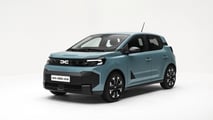
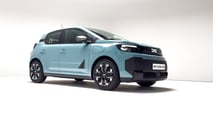
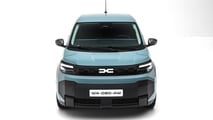
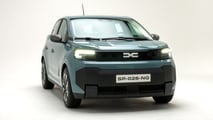
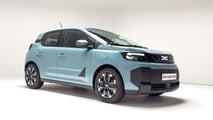
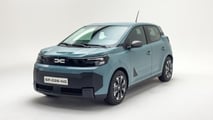
Motor1's Take: The Spring's positioning at the bottom of the EV food chain remains its biggest selling point. Dacia hasn't tried to turn its smallest EV into a premium city car. Instead, it has made the formula bigger, more practical, more modern, and considerably more appealing, while keeping the core promise intact: an affordable electric car that focuses on what most buyers actually need.
Cars like the Dacia Spring can push EV adoption into an even higher gear across Europe. According to data published by the European Automobile Manufacturers' Association (ACEA), zero-emission vehicles are seriously gaining traction. During the first half of the year, 22.2 percent of all new cars sold across the continent (EU+UK+EFTA) were fully electric.
Catch Up With Dacia:
RECOMMENDED FOR YOU
Mercedes Boss Talks Electric E-Class, Developed From A 'White Sheet Of Paper'
2027 Jeep Compass Gets A Price Hike As Standard Features Improve
Porsche Just Confirmed Audi's Electric Sports Car Will Share Its Boxster And Cayman EV Platform
Karma Teases A Winged, Track-Ready Coupe For Halloween Reveal In Las Vegas
Mitsubishi Is Keeping The Lancer Evo's Spirit Alive... In An SUV Built By Another Company
Ford’s Strong Profits Show High Gas Prices Aren’t Keeping F-150 Buyers Away
Mercedes-AMG GT SUV Revealed: Up To 1,153 HP And Three Electric Motors