Ignoring Over-the-Air Updates for Your Car Could Cost You Thousands. Here's Why
GM says customers are responsible for installing updates within 45 days. Otherwise, owners may be on the hook for parts that fail as a result.
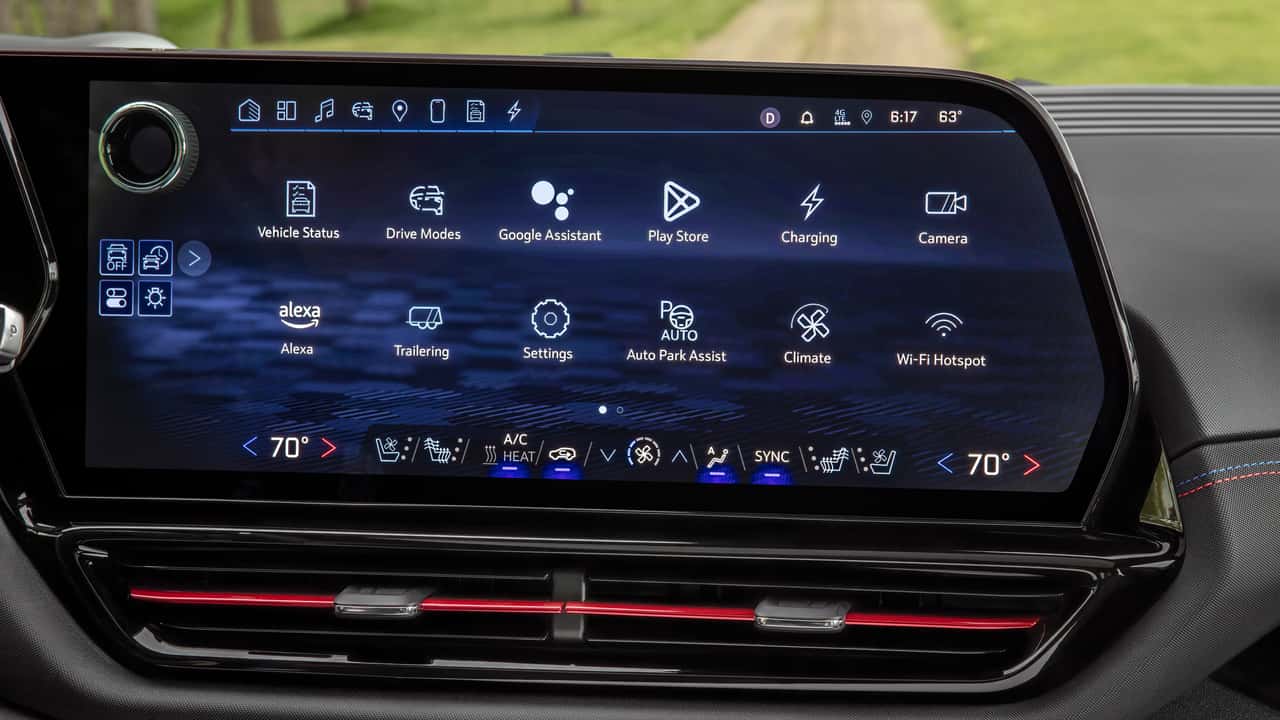

Over-the-air software updates are a game-changer. Whereas before cars had to go to a dealer for a simple software update, costing everyone involved time and money, now automakers can push out important fixes and improvements while their customers' cars sit parked. But customers are responsible for making sure their vehicles are updated, and the consequences for not doing so could be expensive.
GM Authority brought our attention to an interesting stipulation in the warranty booklets for 2025 and 2026 GM cars. The booklets say, "The owner is responsible for ensuring all [brand]-provided Over-the-Air software updates are installed within 45 days of software availability to the vehicle. Damage resulting from failure to install Over-the-Air software updates is not covered."
In other words, if a part of your car fails because you didn't do the software update in time, it's your responsibility. A mistake that could prove costly in certain circumstances.
We've all pushed off doing software updates on our phones, computers, etc., and the results usually aren't catastrophic. Often, forgoing a software update on, say, your phone could leave you vulnerable to cyberattack, but that's about the worst. A car, however, is a large, heavy object that operates at speed out in public. Putting off a software update could have serious consequences.
On the flipside, GM says that "[i]f an Over-the-Air software update causes damage to the vehicle, that damage will be covered for the applicable warranty coverage period." So there's no need to worry about performing a software update.
GM isn't the only one, either. Tesla's current warranty booklet states that "coverage may be excluded for issues arising from your failure to follow specific instructions and recommendations in your owner documentation, or from your failure to [i]nstall the vehicle's software updates after notification that there is an update available."
If other automakers don't have stipulations like this for vehicles that receive over-the-air updates, we imagine that could soon change. Automakers don't want to be on the hook for a problem their customers could've prevented, and none want to pay out any more in warranty claims than absolutely necessary.
So, if you get a notification for a software update in your car, just do it ASAP and save yourself a lot of trouble.
More GM Software

RECOMMENDED FOR YOU

Toyota Recalls 228,000 Sienna Vans Over Seat Backs That May Unlock In A Crash
Do Hybrid Engines Actually Wear Out Faster? The Answer Isn't Simple
Koenigsegg Recalled Every CC850 In America. All Seven Of Them
2027 Jeep Compass Gets A Price Hike As Standard Features Improve
Audi Q4 E-Tron Recall Affects 9,048 EVs Over Battery Fire Risk
Mercedes Boss Talks Electric E-Class, Developed From A 'White Sheet Of Paper'
Toyota Land Cruiser Recall Covers 105,000 SUVs Over Fuel-Leak Fire Risk