AAA Was Around Before Cars
Founded in 1902, AAA predates America's mass-market car boom. Here's how it grew from a motorists' club into a roadside assistance giant.
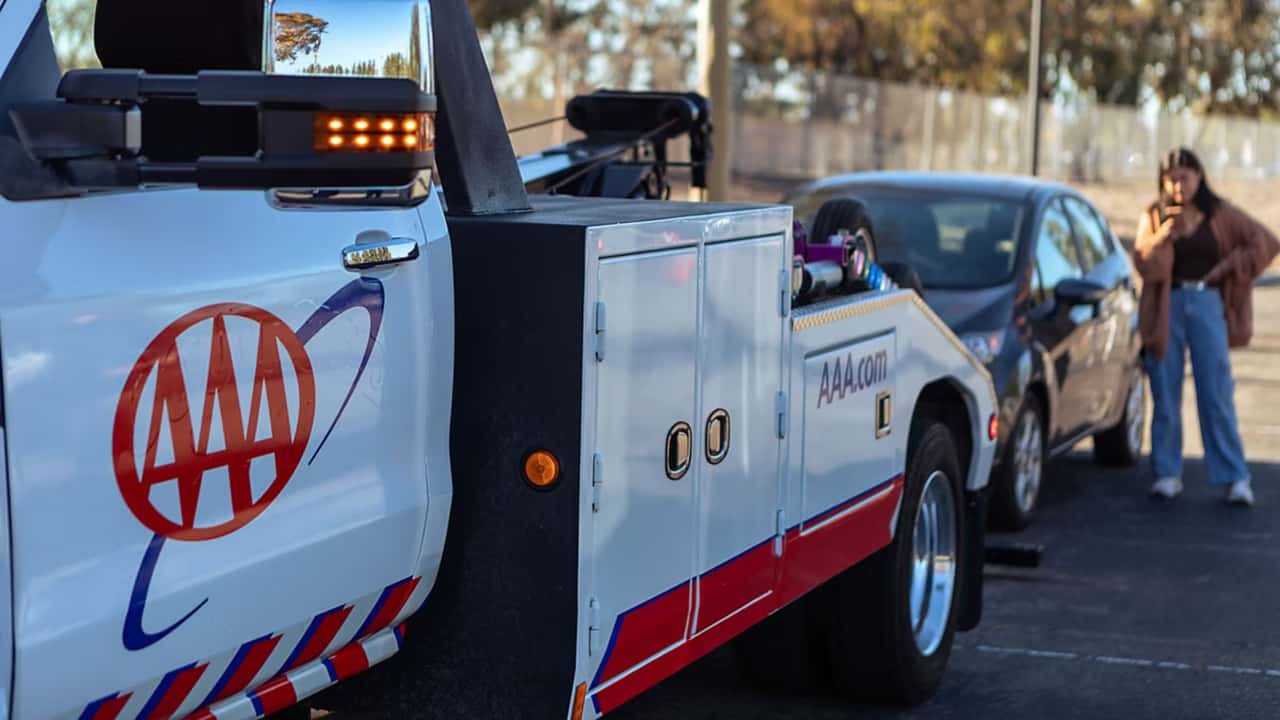

Today, AAA is synonymous with roadside assistance, but the organization was founded in 1902, when automobiles were still rare on American roads and owning one was an unusual luxury. At the time, most roads weren't designed for motor vehicles, and horses remained a dominant form of transportation.
The American Automobile Association wasn't created to rescue stranded motorists or offer insurance policies. Instead, its founders wanted to make motoring more practical by improving roads, advocating for drivers, and helping build the infrastructure needed for a country just beginning to embrace the automobile. More than a century later, AAA has grown far beyond those original ambitions.
AAA Was Founded When Cars Were Still A Rarity
It's difficult to imagine today, but at the beginning of the 20th century, the automobile was far from an everyday necessity. Cars were expensive, roads were often little more than dirt tracks, and traveling by horse remained commonplace.
According to AAA's historical records, approximately 23,000 cars were operating in the United States in 1902, compared with around 17 million horses. Although automotive technology was advancing rapidly, the country was nowhere near the mass-market car culture that would emerge over the following decades.
Nine existing automobile clubs came together in Chicago on March 4, 1902, to establish the American Automobile Association. The organization began with approximately 1,500 members, bringing together motorists who shared an interest in making driving safer and more practical.
The timing is particularly striking. AAA was established before Henry Ford introduced the Model T in 1908, the car that would help make automobile ownership accessible to a much broader segment of the American public.
Better Roads Were One Of AAA's First Priorities
Early motorists faced problems that drivers today rarely have to consider. Many roads had been built for horses and carriages, making them poorly suited to motor vehicles. Rain could turn dirt roads into muddy obstacles, while dry conditions created clouds of dust that reduced visibility.
AAA recognized that selling more cars wasn't enough to create a successful automotive culture. Drivers also needed roads they could actually use.
The organization began advocating for improved highways and better infrastructure, helping push the idea that roads should accommodate the growing number of automobiles. Its early efforts contributed to a broader movement for more reliable transportation routes across the country.
That work helped establish a principle that remains central to motoring today: cars need more than engines, tires, and fuel to be useful. They also need a transportation network designed to get people where they want to go.
AAA Eventually Became A Lifeline For Stranded Drivers


Roadside assistance is probably the first thing that comes to mind when many Americans hear the name AAA. However, that service wasn't part of the organization's original offering.
AAA introduced a service for stranded motorists in 1915, more than a decade after its founding. It was an important development at a time when mechanical problems could leave drivers stuck far from home, often without nearby repair shops or reliable ways to summon help.
As automobiles became more common, the need for roadside assistance grew alongside them. Flat tires, dead batteries, engine trouble, and other mechanical failures became familiar challenges for motorists, creating demand for an organization that could help drivers get moving again.
Today, roadside assistance remains one of AAA's best-known services. Its evolution illustrates how the organization adapted to changing automotive technology while retaining its original focus on making travel more manageable.
AAA's Role Expanded As America Embraced The Car
As automobile ownership grew, AAA expanded its services beyond road advocacy and emergency assistance. Over time, it became associated with travel planning, insurance, automotive advice, and road safety. Some of its most important contributions have included:
- Roadside assistance: Helping drivers deal with breakdowns and other unexpected problems.
- Travel services: Providing resources for people planning road trips and other journeys.
- Road safety: Supporting safer driving practices and initiatives designed to protect motorists and pedestrians.
- Automotive advocacy: Representing drivers' interests and promoting improvements to transportation infrastructure.
- Insurance and related services: Expanding into products that help members manage the practical costs and risks of driving.
AAA also developed programs beyond the needs of drivers themselves. Its School Safety Patrol program, launched in 1920, is one example of its broader involvement in transportation safety.
Today, AAA operates as a federation of affiliated motor clubs, serving millions of members across the United States and Canada. Its services have expanded considerably from the original organization formed by nine clubs in Chicago.
Member Discussions Show How AAA's Role Has Changed Over The Years
AAA's history stretches back to the earliest days of American motoring, but Reddit discussions show how drivers judge the organization today. In an r/BottleDigging thread featuring an early automobile-club radiator badge, commenters reflected on AAA's long-standing reputation, alongside criticism of modern membership costs and services.
More recent discussions reveal mixed experiences with roadside assistance. In r/cars, a longtime member described canceling after a towing dispute involving a modified car, while a thread in r/Autocross questioned the limits of membership after a non-renewal. Others in r/Frugal still called AAA a gold standard for roadside help.
The contrast highlights how much driving has changed since AAA was founded in 1902 as current members' expectations are considerably different from those of the earliest drivers.
AAA Is Older Than America's Mass-Market Car Culture
AAA's founding date offers an interesting perspective on just how quickly the automobile transformed American life. In 1902, the United States had approximately 23,000 cars in operation. By 1910, historical data puts the number of registered passenger cars at roughly 458,500. By 1920, that figure had climbed to more than 8 million.
That growth changed far more than the number of vehicles on American roads. It created demand for better highways, new traffic rules, repair services, fuel stations, and organizations capable of helping motorists navigate an increasingly car-dependent society.
AAA was already established before that transformation gathered momentum. Rather than emerging after the automobile became commonplace, it developed alongside the industry and helped address some of the challenges that came with its growth.
More than 120 years later, AAA remains a familiar part of American motoring. Its history is a reminder that the country's automotive revolution required more than inventing and manufacturing cars. It also depended on organizations willing to help drivers adapt to a completely new way of traveling.
More From Motor101
RECOMMENDED FOR YOU

Can Someone Really Hack Your Car?
Woman Selects ‘Surprise Vehicle’ When Booking Car Rental. Then She Sees What The Company Gave Her: 'This Was 100% Intentional'
F1's Weirdest Race Car Had A Giant Fan On The Back
Driver’s Insurance Accepts Fault After Accident. Then The Victim Asks For A ‘Diminished Value Claim’: ‘My Daughter Got $1,500’
The Difference Between Wet And Dry DCTs Goes Beyond Cooling
Woman Buys Honda Prologue. Then She Gets A ‘High Voltage System’ Warning: ‘‘I Have Spent Over $2,000’
Who Actually Invented The Drive-Thru? It's Complicated