Bentley 6.75-Liter V8 Teardown Shows The Catastrophic Effects Of Hydrolock
At some point in its life, this 6¾ L-Series V8 aspirated a liquid, causing some serious destruction.


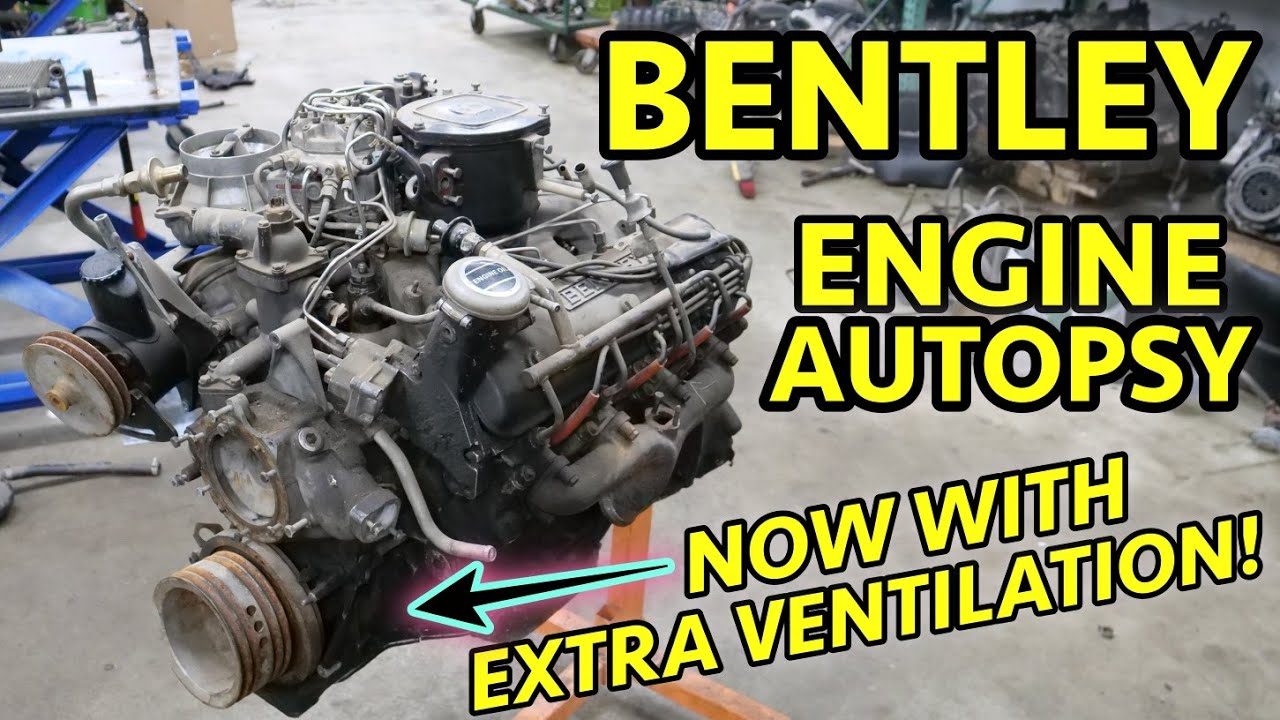
Vintage Bentleys aren't known for their reliability, but it's rarely the engine itself you hear about going wrong. It's other old car stuff, like the hydraulics systems, the electronics, or the infamous Bosch Continuous Injection System (CIS) that malfunctions. This 6.75-liter L-Series V8 is an exception, and a great demonstrator of how hydrolocking an engine leads to catastrophic failure.
According to the I Do Cars YouTube channel, this 6¾-liter V8 likely came out of a 1987 Bentley Mulsanne S. The host acquired the motor from a salvage yard, where it previously sat for several years. Though most of the engine looks clean, two holes in the oil pan point to serious damage hiding inside the block.

Most of the auxiliary parts attached to the V8 come off without much trouble, including that nasty CIS system mentioned earlier. The I Do Cars host runs into trouble when they reach the driver's side head, though, as it's fused to the block thanks to ultra-rusty head bolts. After what feels like an eternity of working with wood and pry bars, they finally get the head off to reveal an extremely nasty-looking (but mostly intact) gasket.
Things get far worse once the I Do Cars host moves to the passenger-side head. They discover it's easier to remove because at some point, this side of the engine got a new head gasket. That didn't do much good, however, because whoever performed the work did a terrible job of resurfacing the block. Adding insult to injury, the replacement gasket has already begun to fall apart.
More Engine Teardowns
Weirdly, it's an area on the driver's side that seems to have suffered the most damage. One of the pistons is able to move freely within the cylinder, indicating it's no longer attached to the crankshaft. Later on in the teardown the host discovers the connecting rod has been ripped apart in spectacular fashion, which is likely what caused the holes in the oil pan. They hypothesize this cylinder aspirated liquid (what kind, they're not sure) at some point. As a reminder, you can't really compress liquid. So something had to give. In this case, it was the connecting rod.
Take this engine's fate as a lesson to take a bit more caution when you drive through that deep puddle. It could save you from a big headache.

RECOMMENDED FOR YOU
Rare 1928 Bentley Barn Find Could Be Worth Over $1 Million
Mazda Is Quietly Killing One Of Its Most Unusual Engines
Every Detail Packed Into The Bentley Torcal First Edition
Do Hybrid Engines Actually Wear Out Faster? The Answer Isn't Simple
The Toyota Corolla Is 60. Here's A Look Back At Every Generation
2027 Jeep Compass Gets A Price Hike As Standard Features Improve
You Can Buy This Wild 1967 Alfa Romeo Giulia Built Like A Le Mans Racer